ADHD, Autism, and Neurodivergence After COVID-19:A Hypoxic–Neurovascular Model of Acquired Executive and Sensory Dysfunction
- Graham Exelby
- Jun 13
- 2 min read

Dr Graham Exelby 2026.
Abstract
The post-2020 rise in ADHD diagnoses, particularly among adolescents and young adults, coincides temporally with the COVID-19 pandemic and raises important questions regarding causality versus increased diagnostic awareness. This paper proposes an integrated physiological model in which SARS-CoV-2 infection acts as a systems-level stressor, unmasking or amplifying ADHD- and ASD-like phenotypes through disruption of preload-dependent cerebral perfusion, neurovascular integrity, and metabolic flexibility.
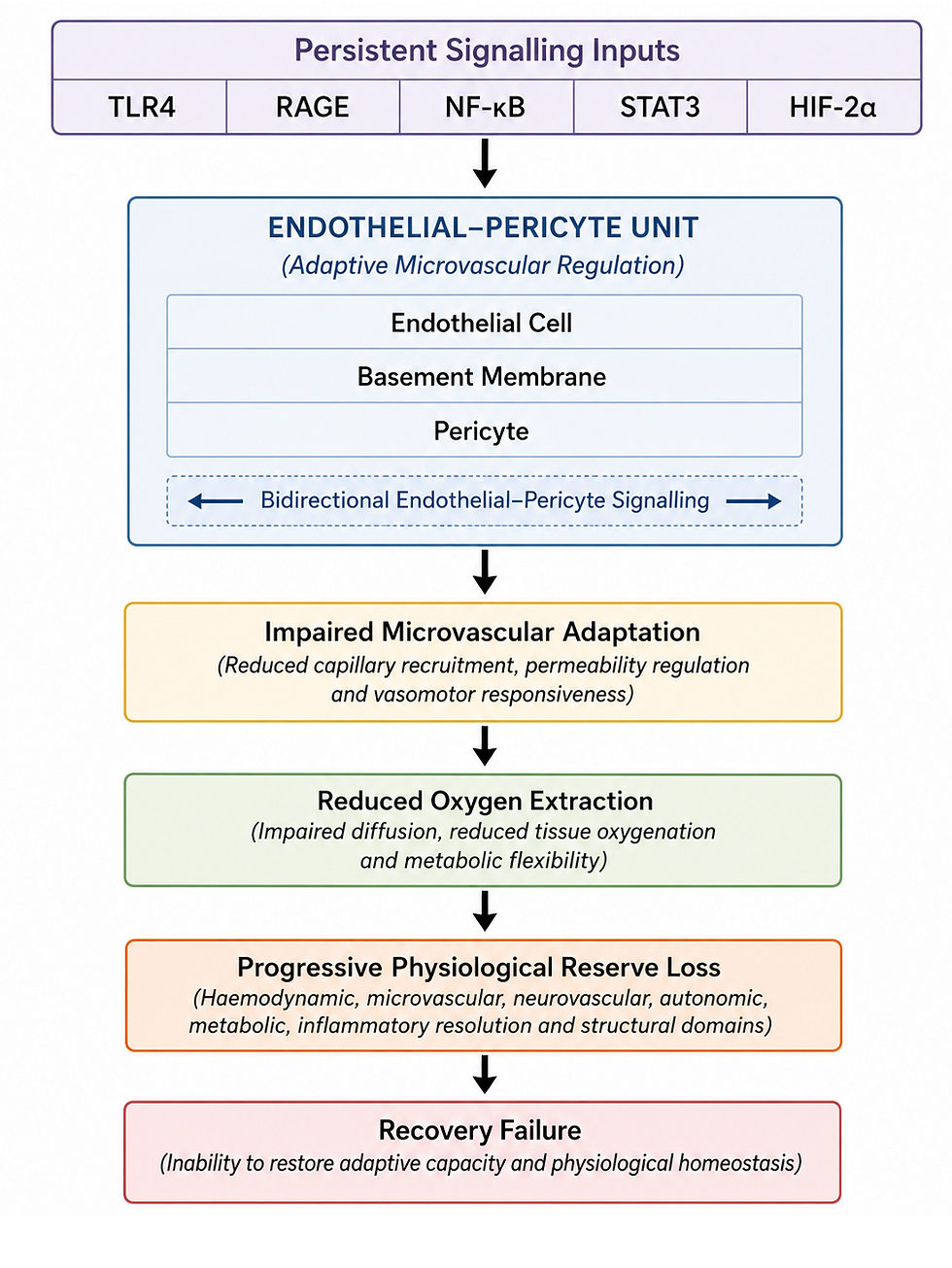
At the core of this model is preload failure, resulting in reduced cerebral perfusion pressure and loss of vascular pulsatility, which together drive regional hypoxia—most prominently within the brainstem, cerebellum, and executive control networks. This initiates neurovascular unit (NVU) dysfunction, including pericyte detachment, endothelial instability, and blood–brain barrier permeability, further compounded by RAAS dysregulation and extracellular matrix (ECM) remodelling that impair venous and glymphatic clearance.
Downstream, hypoxia induces a shift from adaptive HIF-1α signalling to chronic HIF-2α–mediated metabolic rigidity, with disruption of the lactate and malate–aspartate shuttles, reduced mitochondrial efficiency, and impaired redox buffering. These processes converge to reduce inhibitory reserve, reflected clinically and biochemically by low GABA and aspartate, and functionally by instability in cortical network regulation.
Functional imaging using SPECT demonstrates reproducible patterns of brainstem–cerebellar hypoperfusion with concurrent cortical and limbic dominance, reflecting network-level disinhibition and altered gain rather than simple relative preservation. This provides a mechanistic bridge between physiological dysfunction and the observed phenotype of attentional instability, sensory hypersensitivity, and cognitive fatigue.
This framework supports a model of acquired, state-dependent neurodivergence, arising from neurovascular–metabolic constraint rather than primary neurodevelopmental pathology. It emphasises the need for integrated management strategies targeting perfusion, autonomic regulation, metabolic recovery, and structural contributors, rather than reliance on neuromodulatory therapies alone.
Click to read the full paper.
Comments